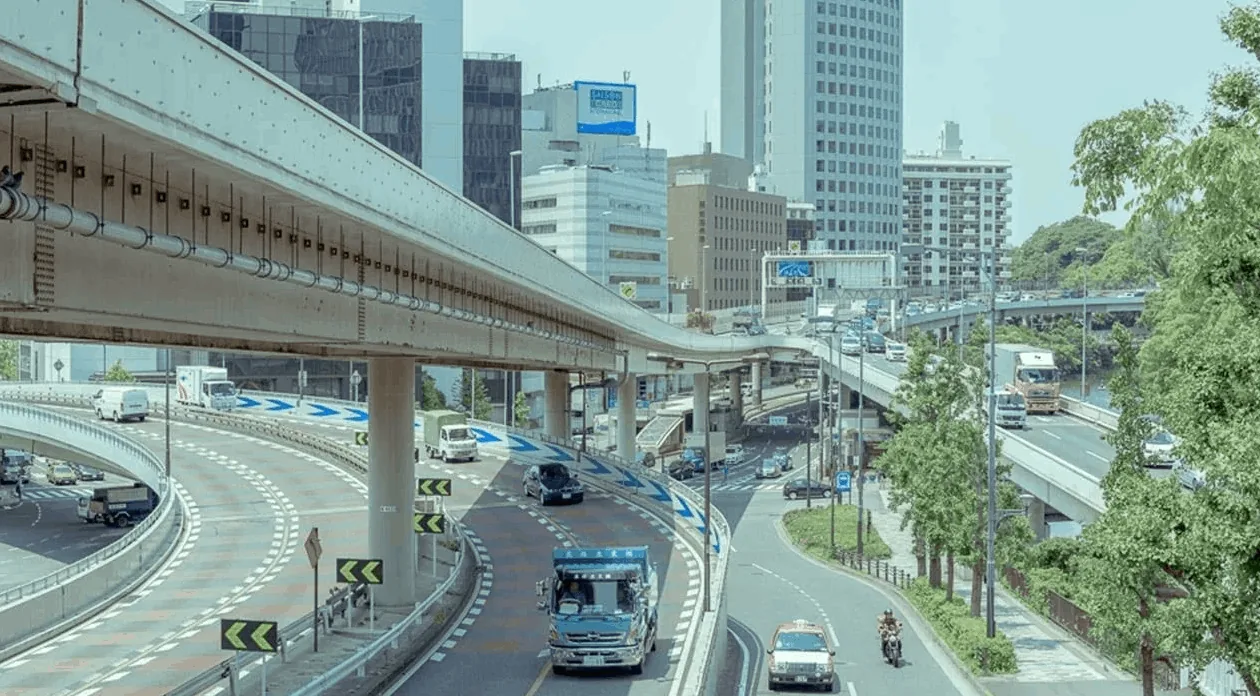
Urban Infrastructure Behind Daily Life
Daily life in Japan’s cities is shaped by systems that often remain invisible, yet they determine how smoothly millions of people move, work, and live. Behind every train arrival, functioning traffic light, or stable water supply lies a complex network of infrastructure systems carefully designed to support high-density urban environments. These systems are the result of long-term planning, continuous maintenance, and ongoing engineering projects that ensure reliability even under extreme conditions. In the context of Japan, where space is limited and population concentration is high, the efficiency of urban development directly depends on how well these foundational systems operate.
One of the most recognizable aspects of daily infrastructure is transportation. Japan’s rail networks are among the most advanced in the world, forming the backbone of commuting life in major cities. These systems rely on synchronized infrastructure systems that coordinate train schedules, station operations, and passenger flow with remarkable precision. Every day, millions of people depend on this network, which is supported by constant upgrades and engineering projects aimed at improving speed, safety, and capacity. The integration of transportation with surrounding urban areas is a key element of modern urban development, ensuring that residential, commercial, and industrial zones remain efficiently connected.
Water management is another essential component of urban life that operates mostly out of sight. Cities in Japan rely on highly organized infrastructure systems for water supply, wastewater treatment, and flood control. These systems are designed not only for daily consumption but also for resilience during natural disasters such as heavy rainfall or earthquakes. Behind them are extensive engineering projects that involve underground pipelines, purification facilities, and drainage networks. These systems are carefully maintained to ensure public health and environmental protection, reflecting the broader principles of sustainable urban development.
Electricity distribution plays a similar hidden but crucial role. Modern cities require uninterrupted power for transportation, communication, healthcare, and residential use. Japan’s energy networks are tightly integrated with urban infrastructure systems, ensuring that electricity flows efficiently across densely populated areas. In residential and commercial zones, smart buildings contribute to this stability by regulating energy consumption and reducing unnecessary demand. These buildings are often part of larger engineering projects that aim to modernize aging infrastructure while improving energy efficiency in line with long-term urban development goals.
Public safety systems are another invisible layer of urban life. Emergency response networks, seismic monitoring systems, and early warning technologies are embedded into city structures to protect residents. These systems depend on highly coordinated infrastructure systems that connect sensors, communication networks, and response teams in real time. Japan’s experience with natural disasters has led to continuous innovation in this area, resulting in advanced engineering projects designed to minimize risk and improve reaction speed. These efforts are closely tied to urban development, ensuring that safety is built into the foundation of cities rather than added as an afterthought.
Waste management also plays a significant role in maintaining livable urban environments. Efficient collection, recycling, and disposal systems are essential in densely populated areas, where space is limited and environmental impact must be carefully controlled. These processes are supported by structured infrastructure systems that coordinate logistics across neighborhoods and industrial zones. Many municipalities invest in modern engineering projects that improve recycling efficiency and reduce environmental footprint. At the same time, innovations in smart buildings help reduce waste generation through better resource management, contributing to broader sustainability in urban development.
Digital connectivity has become a fundamental part of urban infrastructure in recent decades. High-speed communication networks enable transportation systems, financial services, healthcare, and education to function efficiently. These digital layers are now considered part of modern infrastructure systems, working alongside physical structures to support daily life. The expansion of fiber networks and data centers is driven by large-scale engineering projects that reflect Japan’s commitment to technological advancement. In this context, smart buildings also play a role by integrating digital systems that enhance both comfort and operational efficiency within urban environments.
Urban life in Japan is also influenced by how public spaces are designed and maintained. Parks, pedestrian zones, and community facilities are all supported by underlying infrastructure systems that ensure accessibility, safety, and sustainability. These spaces are often included in long-term urban development strategies that aim to improve quality of life while maintaining efficient land use. Behind these visible environments are continuous engineering projects focused on landscaping, structural safety, and environmental adaptation.
Ultimately, the smooth functioning of daily life in Japanese cities depends on the seamless interaction of countless systems operating together. From transportation and utilities to digital networks and public spaces, everything is connected through carefully designed infrastructure systems. These systems are continuously improved through innovative engineering projects, integrated with energy networks, and enhanced by the presence of smart buildings. Together, they form the backbone of modern urban development, supported by ongoing construction insights that ensure cities remain functional, resilient, and adaptable to future challenges.